Middle East

Central Hub for the Middle East

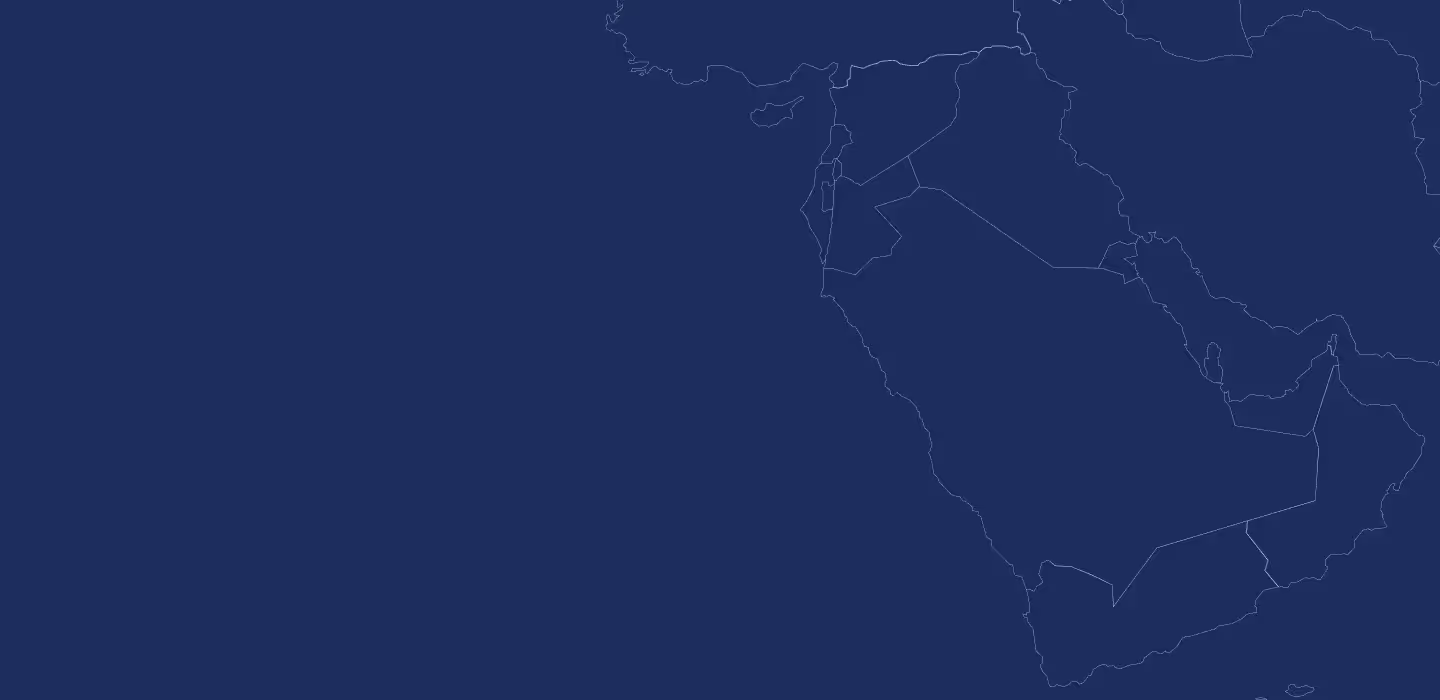
Map of the Middle Eastern region highlighting compliance regions

Navigating the Regulatory Landscape

This page serves as a centralized resource for understanding pharmaceutical regulatory requirements across countries in the Middle East. Each country listed below includes a summary of its compliance landscape along with a link to more detailed information. From serialization initiatives to national track-and-trace mandates, this hub provides streamlined access to the regulatory frameworks governing pharmaceutical supply chains across the region.

All Regulations

Graphic element

Bahrain

In Bahrain, the National Health Regulatory Authority (NHRA) establishes comprehensive regulations to safeguard pharmaceutical integrity throughout the supply chain. The NHRA's stringent regulatory framework represents Bahrain's dedication to ensuring medication authenticity, patient safety, and supply chain transparency through advanced traceability and verification systems.

Egypt

Egypt's Egyptian Drug Authority (EDA) has introduced comprehensive pharmaceutical traceability regulations designed to secure the pharmaceutical supply chain, combat counterfeit drugs, improve transparency in healthcare, and protect public health. Through Decree No. 161 of 2025, issued on April 29, 2025, the EDA has established mandatory unified coding requirements for all pharmaceutical products and medical supplies within the Egyptian market, creating one of the most robust pharmaceutical oversight systems in the region.

Ethiopian EFDA

In Ethiopia, the Ethiopian Food and Drug Authority (EFDA) plays a pivotal role in ensuring the safety, efficacy, and quality of pharmaceuticals. Central to its regulatory framework is the EFDA Traceability Directive, a comprehensive set of requirements designed to bolster the traceability of medicinal products within the pharmaceutical supply chain.

Iraq

Iraq has established a comprehensive pharmaceutical regulatory framework through its National Drug System (المنظومة الوطنية للدواء), administered via the Gudea portal. This pioneering digital platform represents Iraq's commitment to enhancing drug safety, combating counterfeit medications, and ensuring complete transparency throughout the pharmaceutical supply chain. The system mandates rigorous tracking and tracing protocols for all pharmaceutical products, whether domestically manufactured or imported, creating an integrated ecosystem that protects patients while supporting regulatory oversight.

Lebanon

Lebanon's Ministry of Public Health (MoPH) has implemented the MediTrack system as a comprehensive pharmaceutical traceability solution designed to safeguard public health and ensure medicine authenticity throughout the supply chain. This GS1-compliant track and trace system represents Lebanon's commitment to combating counterfeit medicines, preventing diversion, and maintaining transparent pharmaceutical distribution from manufacturing to patient dispensing.

Nigeria

In Nigeria, the National Agency for Food and Drug Administration and Control (NAFDAC) stands at the forefront of pharmaceutical safety through its ambitious track and trace regulations. Established under Nigeria's commitment to combating substandard and falsified medicines, NAFDAC's traceability framework represents a transformative approach to pharmaceutical supply chain integrity. This comprehensive system aims to provide end-to-end visibility from manufacturing facilities to patients, fundamentally reshaping how pharmaceutical products are monitored and protected throughout Nigeria's healthcare ecosystem.

No Regulations Found

Click clear all to reset the filters.

Thank you! Your submission has been received!
Oops! Something went wrong while submitting the form.
Contact us

Get in touch today

Send us a message

We'd love to hear from you!

Check - Elements Webflow Library - BRIX Templates

Thank you

Thanks for reaching out. We will get back to you soon.
Oops! Something went wrong while submitting the form.